

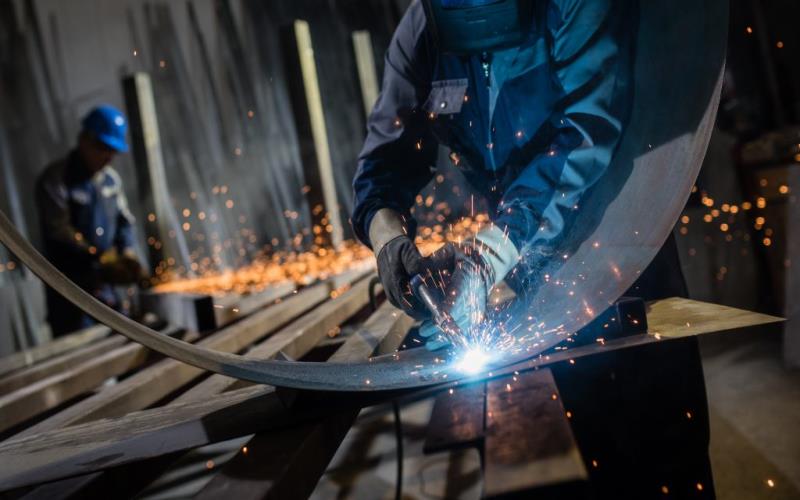
While welding and sheet metal fabrication may seem similar on the surface, these two professions are quite different. If you’re wondering if these two roles are interchangeable, they’re not. These professionals need different skill sets and they have unique responsibilities.
There are several skill differences between sheet metal workers and welders although they both work with metal. Welding is a specific process within the broader scope of sheet metal fabrication. Welders focus on the art of joining metal pieces together, while sheet metal workers engage in a wide range of tasks, including cutting, bending, and assembling metal components.
Intrigued to learn more? Keep reading to find out about their skills and the techniques and tools they use, along with where these two professions overlap.
What does a sheet metal worker do?
A sheet metal worker’s job is all about shaping, assembling, and installing metal products. These professionals work with large metal sheets where they cut, bend, and join them to create a variety of items, from air ducts to roofing panels.
The day-to-day tasks of a sheet metal worker include measuring and marking metal, then using specialized tools to cut and shape it. They might use machines like shears, brakes, and punches, or high-tech equipment like metal cutting lasers and CNC machines. In some cases, they also weld, rivet, or solder parts together.
While some workers focus on manufacturing products in a shop, others specialize in installing and maintaining metal systems. For example, they may work on HVAC systems, exhaust hoods, air ducts, kitchen ventilation, or even install roofing and eavestroughs. It’s a hands-on job that requires attention to detail, good math skills, and the ability to read blueprints and specs.
In addition to their technical work, sheet metal workers often inspect their own installations to ensure everything meets safety codes and quality standards.
How do the skills of a sheet metal worker differ from a welder?
Both sheet metal working and welding require skill, training, and an eye for detail. Whether it’s crafting intricate sheet metal parts or creating strong, lasting welds, each profession plays an important role in metalworking industries.
But their skill sets and daily tasks are quite different. Understanding these differences between sheet metal workers and welders gives you a clear idea about the unique expertise each trade requires.
Skills of Sheet Metal Workers
Sheet metal workers specialize in taking large, thin sheets of metal and transforming them into finished products. This could be anything from air ducts in buildings to metal panels used in car bodies. Their work is highly precise, requiring attention to measurements and detail.
The main required skills of these professionals are:
- Blueprint Reading: Understanding technical drawings is essential, as they guide the cutting, bending, and assembly of metal sheets.
- Cutting and Shaping: They use tools like shears, presses, and rollers to shape metal into specific forms.
- Assembly and Installation: Many sheet metal projects require assembly, meaning workers must fit, fasten, and install pieces with precision.
- Use of Specialized Tools: Sheet metal workers rely on tools designed for fabrication, like press brakes, hydraulic cutters, and stamping machines.
This trade is often hands-on, but it’s more about shaping and constructing than joining metal parts together, which is what welding does.
Skills of Welders
Unlike sheet metal workers, welders focus on permanently joining metal pieces. They work with pre-cut and shaped materials, using intense heat to melt and fuse metals together. Welding work is needed in everything from bridge construction to shipbuilding and automotive manufacturing.
The required skills of a welder are:
- Mastering Welding Techniques: Whether it’s MIG, TIG, or stick welding, welders need to know how to use different techniques.
- Material Selection: Choosing the right filler metals and welding approach is important for ensuring strong, durable joints.
- Precision and Inspection: A bad weld can lead to structural failure, so welders must check their work carefully, often using X-rays or ultrasonic testing.
- Industry Specialization: Some welders work in specialized fields like underwater welding or aerospace, requiring additional training and certification.
You should contact a CNC or metal fabrication shop, if you need sheet metal fabrication near me.
Overlapping tasks between sheet metal workers and welders
There are certain differences between sheet metal workers and welders regarding the work they do, but their work sometimes overlaps too, especially in construction and fabrication. The primary overlapping tasks are:
Blueprint Reading: Understanding technical drawings is mandatory in both professions. It ensures the correct dimensions and assembly of metal parts.
Metal Joining: Both welders and sheet metal workers connect metal parts. Welders use specialized techniques, while sheet metal workers may weld, rivet, bolt, or solder components to fasten seams.
Material Preparation: Measuring, cutting, and shaping metal are common tasks in both fields. For strong joints and easy assembly, accuracy in preparation is essential.
Tool Proficiency: Both professions use tools like shears and welding machines to shape and join metal pieces.
Specialized tools and techniques used in each trade
Sheet metal working and welding are essential in metal fabrication. Both require specific tools and techniques to shape, cut, and join metal effectively. Let’s take a closer look at some of the most important ones.
Tools and Techniques in Sheet Metal Fabrication
Sheet metal fabricators rely on a set of essential tools to complete their work:
- Lathe machines are used for shaping cylindrical parts and creating symmetrical components.
- Grinders smooth out rough edges and refine metal surfaces.
- Fabricators use drills to create precise holes for screws, bolts, or other fasteners.
- Sheet rollers assist in shaping metal sheets into curved structures.
These tools help transform raw metal sheets into functional products with precise specifications.
When we talk about techniques, the metal fabrication process involves multiple ones, each serving a unique purpose. Here are some key techniques:
Cutting: Fabricators cut metal sheets to the required dimensions using methods like shearing, laser cutting, or plasma cutting. These ensure precision and minimize material waste.
Bending: This process shapes metal into desired forms using press brakes or rollers. Bending creates structures like brackets, enclosures, and ducts.
Punching and Stamping: These techniques use powerful machines to create holes, shapes, or patterns in metal sheets. They are commonly suitable for mass production.
Rolling: Sheet rollers help achieve curved or cylindrical shapes, which is useful in making pipes, tubes, or curved panels.
Each technique relies on specialized equipment to ensure accuracy and efficiency.
Welding Tools and Techniques
Welding is a crucial part of fabrication, used to join metal pieces together. There are different welding techniques, each suited to specific applications:
MIG Welding (Metal Inert Gas): Uses a consumable wire electrode and shielding gas to create strong and clean welds. This method is popular for its speed and ease of use.
TIG Welding (Tungsten Inert Gas): Produces high-quality welds with excellent precision, which is ideal for thin metals and detailed work.
Stick Welding (Shielded Metal Arc Welding): Uses an electrode rod that melts and fuses metal pieces. It’s often used for heavy-duty applications and outdoor projects.
To perform these techniques, welders use various tools, including:
- Clamps that hold metal pieces in place during welding.
- Electrodes that serve as a filler material to create strong welds.
- Power sources that provide the necessary energy to generate heat for welding.
- Auto-darkening helmets that protect welders’ eyes from bright sparks and UV radiation.
When does a project require both a sheet metal worker and a welder?
There are differences between sheet metal workers and welders but some projects need the skills of both of them to get the job done right. Usually, such projects involve both shaping and joining metal.
i. Large-Scale Fabrication
In construction and manufacturing, metal components often need to be shaped and then assembled. A sheet metal worker cuts and forms panels, while a welder fuses these pieces into a finished structure. This teamwork is common in making frames, metal cabinets, and industrial structures.
ii. HVAC Systems
Heating, ventilation, and air conditioning (HVAC) systems rely heavily on these professionals. Sheet metal workers do the designing and shaping of the ductwork. Then, welders step in to join metal sections or reinforce weak spots, ensuring the system is airtight.
iii. Machinery and Equipment Manufacturing
Industrial machines and equipment often start as flat metal sheets. The fabricators shape and cut the necessary parts, but welding is needed to secure the framework and support structures. This combination is used in manufacturing everything from farm equipment to factory machines.
iv. Aerospace and Automotive Production
Precision is quite important in manufacturing aerospace and automotive components. Sheet metal workers form sleek, aerodynamic parts, while welders ensure secure attachments of these components. This combination makes cars, airplanes, and other vehicles safe, and allows them to perform at their best.
Conclusion
Sheet metal workers and welders each bring unique strengths to metal fabrication projects. They tackle different tasks while often collaborating to build safe and reliable structures. Their combined expertise is necessary for building plenty of structures, from the smallest HVAC component to the largest industrial framework.
At Zintilon, we provide various sheet metal fabrication services to bring your projects to life. Whether it’s new energy, robotics, or automotive parts, we deliver the best results every time. Contact us and get your perfect metal solution!
