

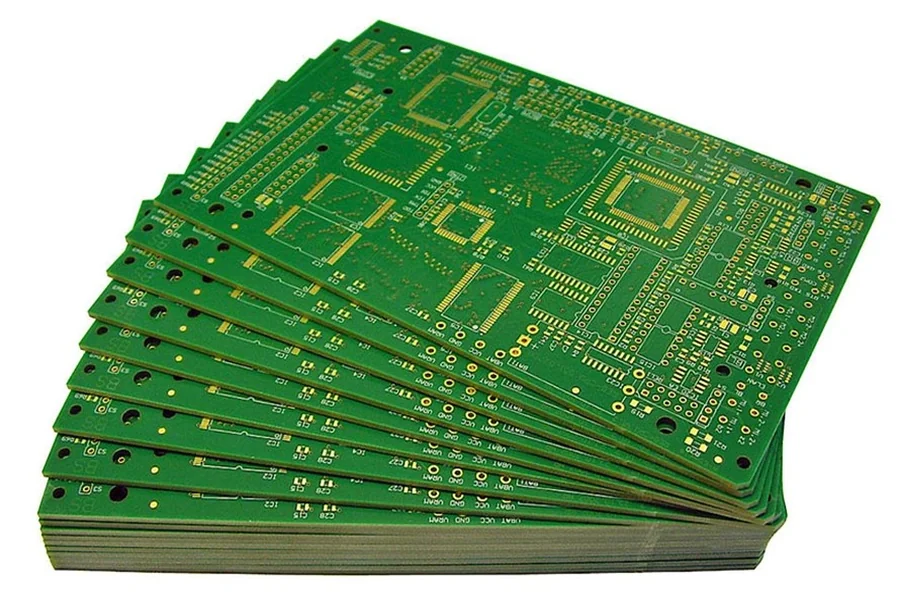
An impedance control printed circuit board is a specialized type of PCB designed to maintain a consistent electrical impedance throughout the signal traces. This precision is crucial in high-speed and high-frequency circuits, where even slight variations in impedance can cause signal distortion, reflection, and loss. In these applications, the PCB is not just a platform to connect components—it is an active part of the signal transmission system. By carefully controlling the trace width, spacing, copper thickness, and dielectric properties, engineers can ensure that signals travel smoothly and without degradation.
Impedance control is most important in applications such as high-speed data transfer, RF and microwave communications, medical imaging systems, and aerospace electronics. These industries rely on consistent impedance to maintain signal integrity and achieve reliable performance under demanding conditions.
The Importance of Impedance Control in PCB Design
In modern electronics, data rates have increased significantly, and the frequencies at which signals operate have moved into the gigahertz range. At such high speeds, the PCB’s physical characteristics directly affect how signals behave. Without proper impedance control, there can be mismatches between the source, transmission line, and load, leading to reflections that reduce performance. This is especially critical in systems such as USB 3.0, HDMI, high-speed Ethernet, and 5G communication devices, where precision in signal timing and quality is essential.
Impedance control printed circuit boards are designed by calculating and simulating the exact impedance values required for each trace. The design process often involves the use of controlled dielectric materials and specific trace geometries, ensuring that the board meets stringent electrical specifications. Manufacturers may use advanced fabrication processes, such as laser drilling, sequential lamination, and tight tolerance etching, to achieve the required consistency.
Factors Affecting Impedance in a PCB
Several factors contribute to the impedance value in a PCB, and controlling them is essential in producing a high-quality impedance control printed circuit board. One of the primary factors is the trace geometry, including the trace width and thickness. Even a small variation in these dimensions can alter the impedance value. The spacing between traces, as well as the distance from the trace to the reference plane, also plays a significant role.
The dielectric constant (Dk) of the PCB substrate is another critical factor. Materials such as FR4, Rogers, and polyimide each have different dielectric properties that influence impedance. High-frequency applications often require low-loss materials with stable Dk values across temperature and frequency ranges. Copper roughness can also affect signal behavior, especially at high frequencies. A smoother copper surface tends to provide better signal integrity.
Controlling all these variables requires a close collaboration between the PCB designer and manufacturer, along with rigorous process control during production.
Applications of Impedance Control Printed Circuit Boards
The use of impedance control printed circuit boards spans a wide range of industries. In telecommunications, they are essential for enabling fast and reliable data transfer over long distances. In computing, they support high-speed interconnects between processors, memory, and storage devices. In automotive electronics, particularly in advanced driver-assistance systems (ADAS), precise impedance control ensures that sensor signals are transmitted without interference.
Medical devices, such as MRI machines and ultrasound equipment, also rely on impedance control PCBs to maintain accurate imaging and diagnostic capabilities. Aerospace and defense applications use these boards in radar systems, satellite communications, and avionics, where performance and reliability are critical under extreme conditions.
Manufacturing Challenges and Quality Control
Producing an impedance control printed circuit board requires advanced manufacturing techniques and meticulous quality control. The fabrication process must account for every factor that influences impedance, from the initial material selection to final inspection. Manufacturers often use impedance test coupons—small sections of the PCB with test traces designed to verify impedance performance before the main boards are assembled.
Specialized equipment, such as time-domain reflectometers (TDR), is used to measure the impedance of test traces accurately. If measurements are outside of the specified tolerance, adjustments must be made to the manufacturing process to ensure compliance. This level of precision requires experience, technical expertise, and state-of-the-art facilities.
Future Trends in Impedance Control PCB Technology
As electronics continue to evolve, impedance control printed circuit boards will play an even greater role in ensuring reliable performance. The shift toward higher frequencies, increased miniaturization, and the growth of IoT and 5G technologies will drive demand for even tighter impedance tolerances.
Emerging materials with improved dielectric properties and lower loss tangents will help manufacturers meet these demands. Automated design tools that integrate impedance simulation with PCB layout software are becoming more advanced, enabling designers to predict and optimize impedance values earlier in the design process.
Choosing the Right Partner for Your Impedance Control PCB Needs
Selecting the right impedance control PCB manufacturer is crucial for achieving the desired electrical performance in your products. A reliable manufacturer should offer expertise in high-frequency PCB design, access to high-quality materials, and advanced fabrication capabilities. They should also maintain strict quality control processes, including comprehensive impedance testing, to ensure every board meets specifications.
Partnering with an experienced impedance control PCB manufacturer can make a significant difference in the performance and reliability of your final product. Whether you are developing cutting-edge communication devices, medical systems, or aerospace electronics, working with the right manufacturer ensures that your boards are built to handle the demands of high-speed signal transmission with precision and consistency.
